Reach
A spear, bow or blade decides where a fight starts and how much space you can hold.
Weapons, protection & practical gear
Every item has reach, weight and upkeep. You find it or buy it, fit it to your hand, repair it and learn how to use it. When it breaks, you usually mend it.
A spear, bow or blade decides where a fight starts and how much space you can hold.
More coverage means more weight and more heat. How it fits affects your speed, what you can see and how long you last.
What is on your belt, in your pack or back with the mule matters once the first clash is over.
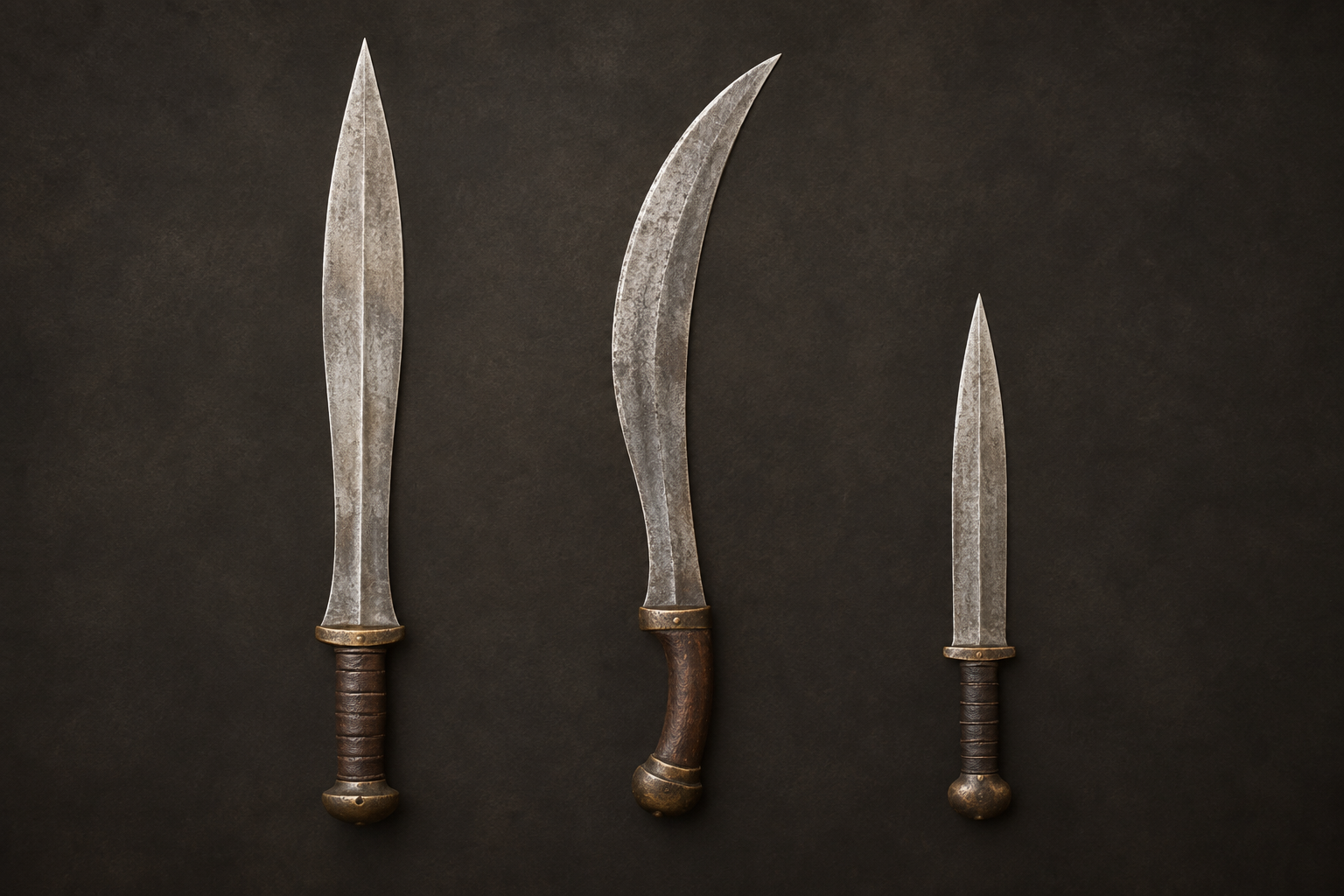
Close work
A short sword, a curved cutting blade and a dagger each need a different distance, draw and recovery. Grip, balance and a well-kept edge matter as much as the shape.
Useful once the line has broken, in a narrow doorway, or whenever the work is close.
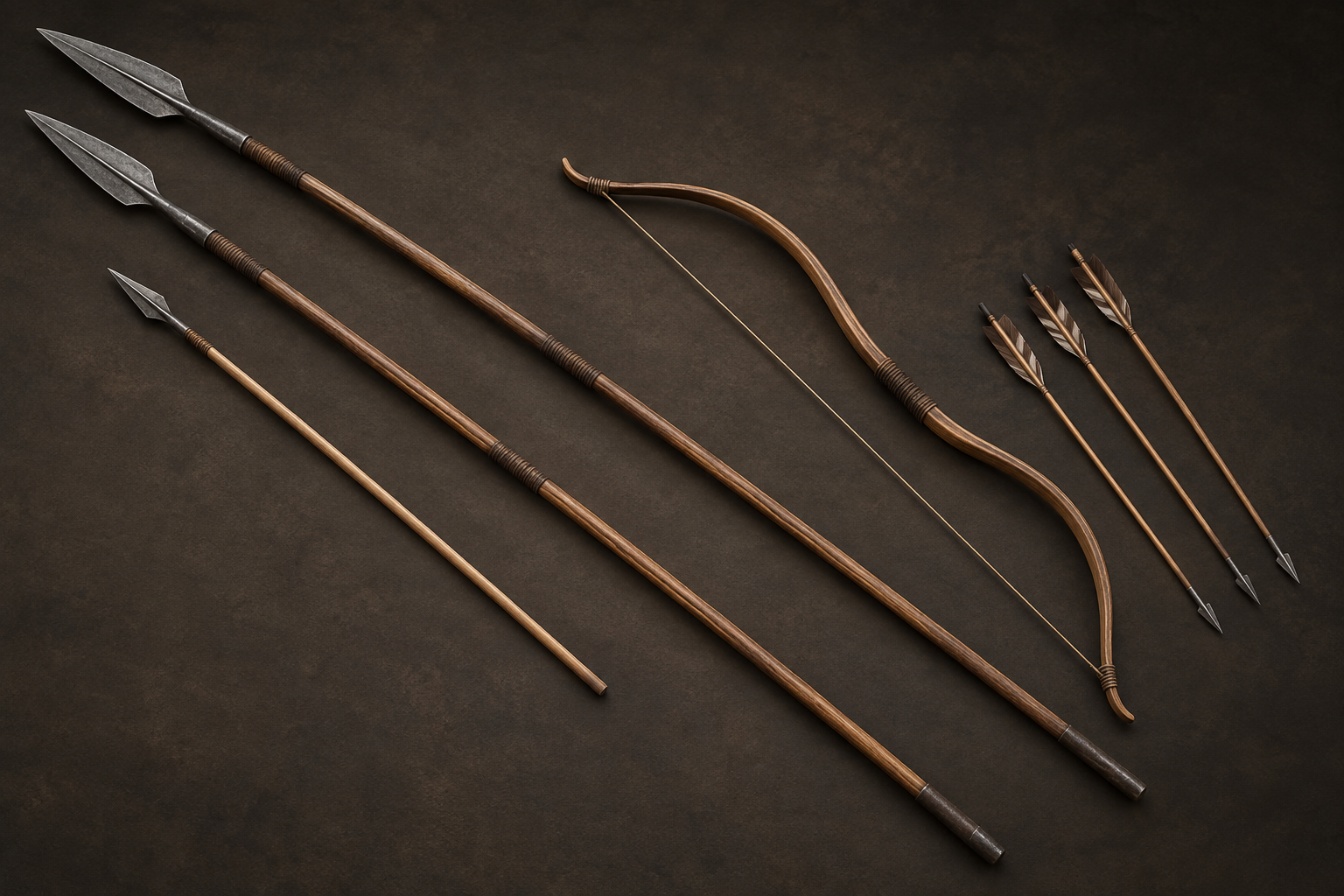
Distance & timing
Spears, javelins and bows can settle a fight before the two sides meet. Enough arrows, open ground and a trained hand often count for more than a heavier weapon.
Reach buys you time. You still have to move, keep watch and pick your route.
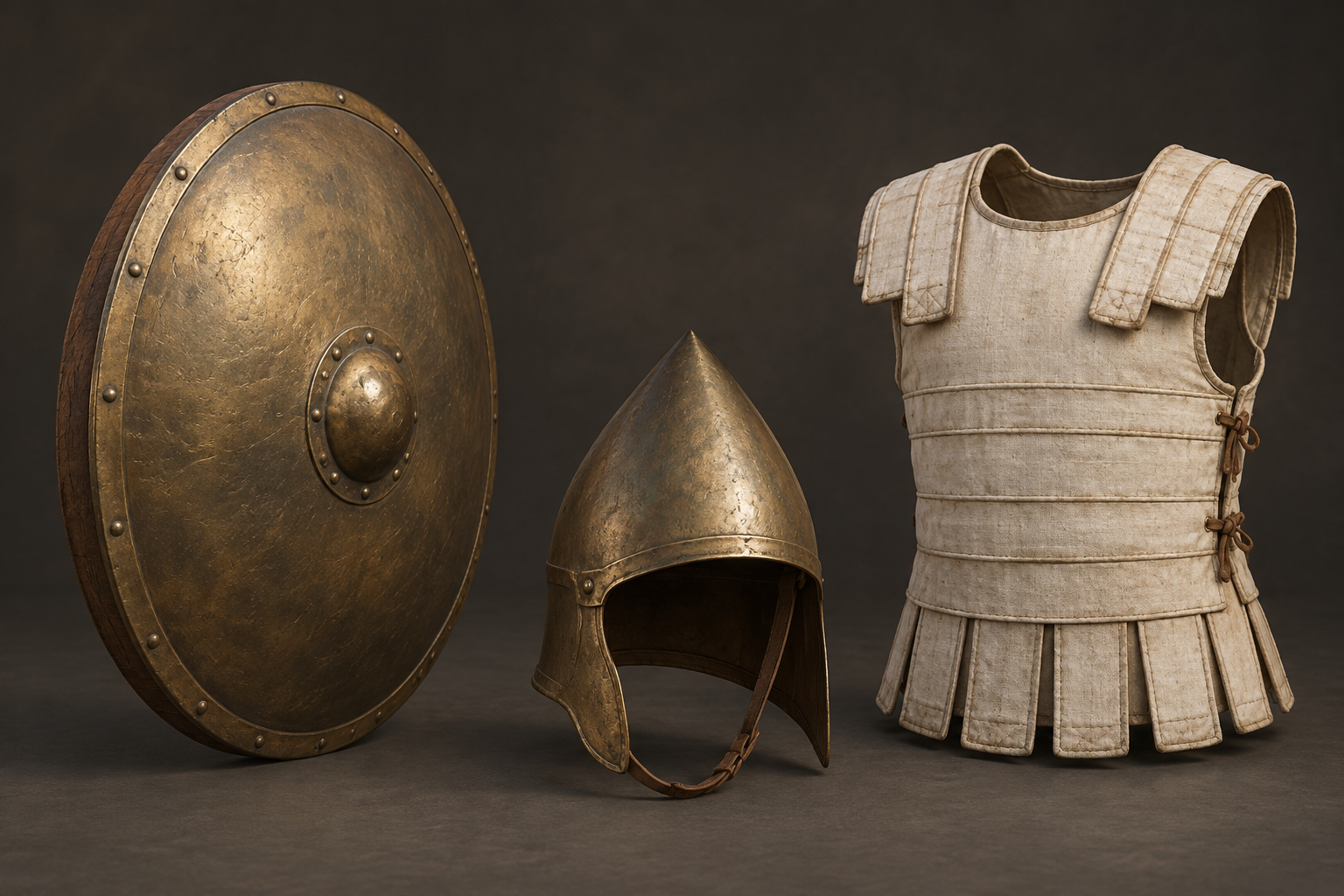
Cover & movement
A shield, a helmet and layers of linen can keep you in a fight, but each piece adds heat and fatigue and slows you on the road. A piece that fits badly or is poorly kept protects less.
No single set works everywhere. It depends on the road, the weather and who is travelling with you.
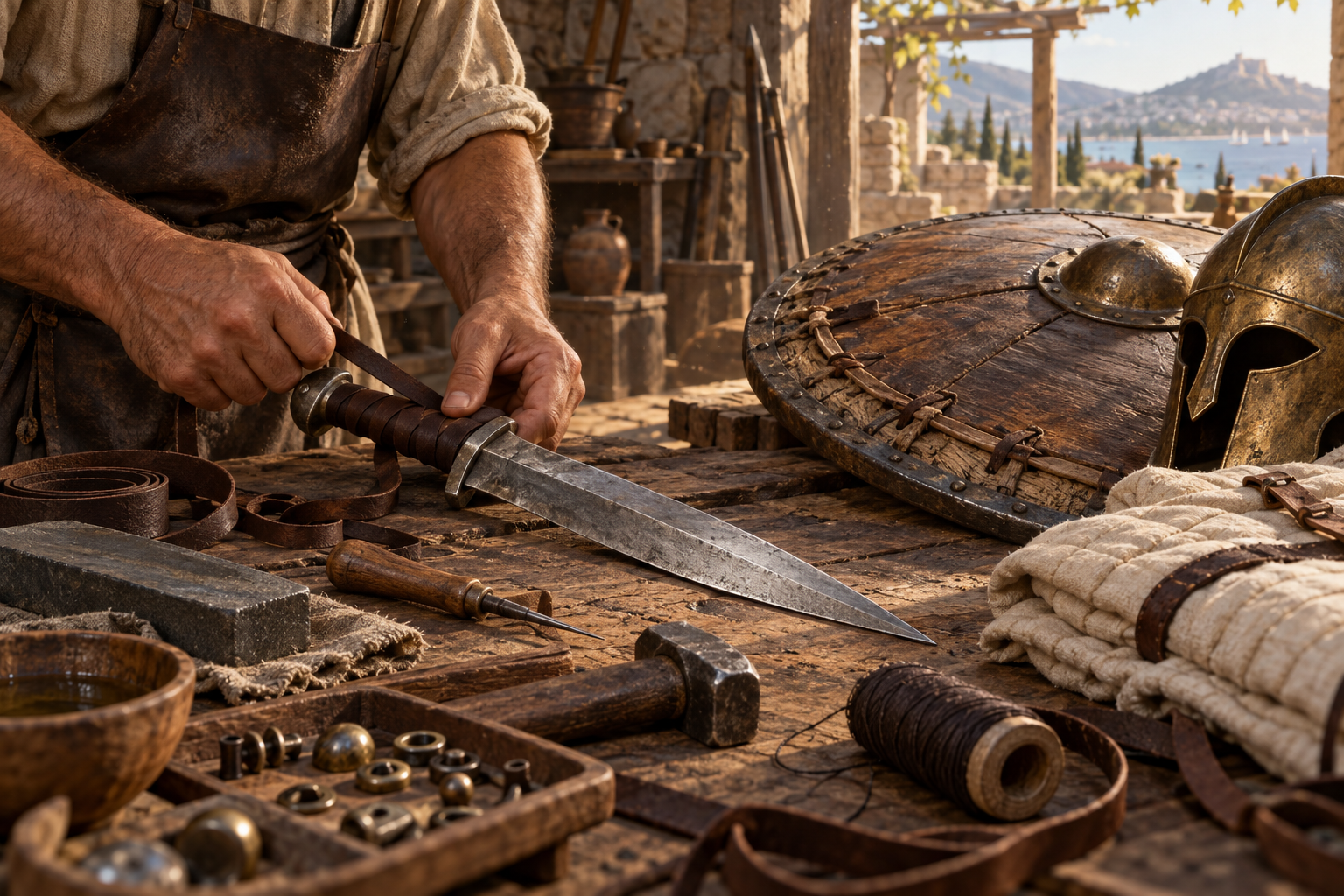
Fitting, repair & craft
Take a weapon, shield or travel kit to an artisan and decide what to change: a firmer grip, a new strap, a replacement part or an edge sharpened for the road. The work changes how the object handles when you need it.
Better-made equipment can take more work, and an old favourite may still be worth repairing. What an artisan can do depends on the materials, local know-how and the object itself.
How improvement works
Permanent changes come in stages, and each one is a bigger commitment than the last. You change the object itself, so every step has real costs and risks.
Adaptation
Adjust the grip, balance, strap or another detail of this particular item.
Safe workFunctional work
Replace or reinforce a part. It takes materials and a specialist’s time.
Cost & repair riskMajor work
A major alteration. How far it can go depends on how the piece was made, its history and the artisan’s skill.
Highest riskProbabilities, recovery rules and historical limits are being designed separately for each type of object.
Between workshops
Not every improvement is permanent. Some things you carry, swap and replace, and packing them is part of getting ready for a journey.
Change handling without remaking the weapon.
Carry what fails first: straps, cords, points and fittings.
Sharpen and prepare equipment before a difficult route or encounter.
Layers, bags, tools, food, documents and cargo, all useful for more than fighting.
Where it comes from
You buy it, commission it from an artisan, earn it on quests or take it from opponents, who drop what they were actually carrying. Animals yield only what an animal can: meat, hide, bone. What is on offer changes from place to place and with imported goods, and every final model is checked against the evidence for 334 BCE.
Original equipment concepts, not final game assets or authenticated reconstructions.