Horse
Fast on the road and over long distances. A horse carries a rider and a small load, and needs feed, rest and care.
Speed · distance · ridingMounts, cargo & passage
Ride, carry, haul or take a ship. How you travel decides how far you get, what you can bring and which routes are open to you.
Rideable animals
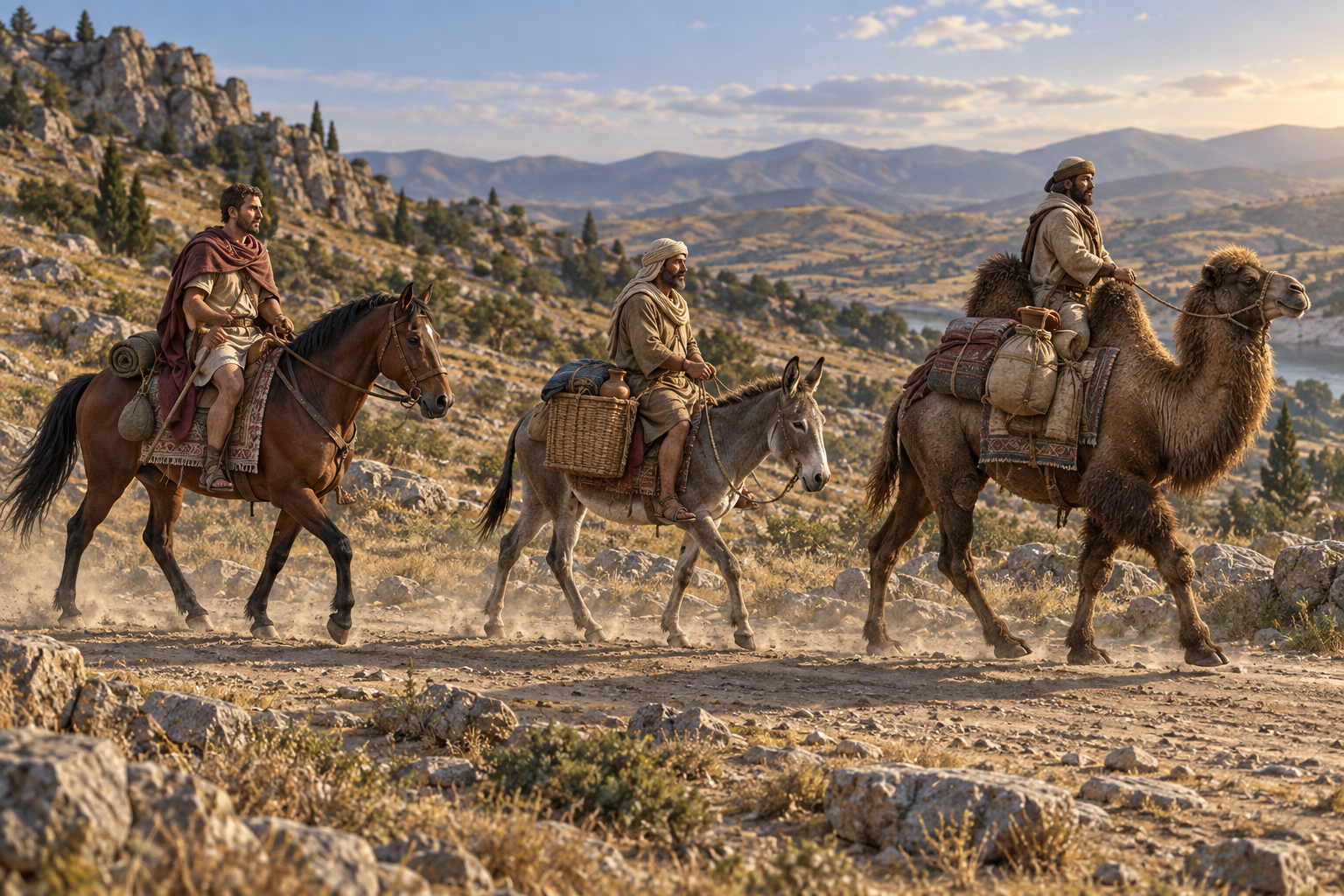
Horses, donkeys and Bactrian camels are all planned as mounts. They differ in speed, in how much they carry, in the ground they handle and in where you will find them.
Fast on the road and over long distances. A horse carries a rider and a small load, and needs feed, rest and care.
Speed · distance · ridingSure-footed on rough tracks. Ride it, load it with packs, or split the weight between you and your cargo.
Rough ground · economy · cargoBuilt for long, dry and cold inland routes. You will find camels where the trade routes and the historical record put them.
Endurance · climate · long routes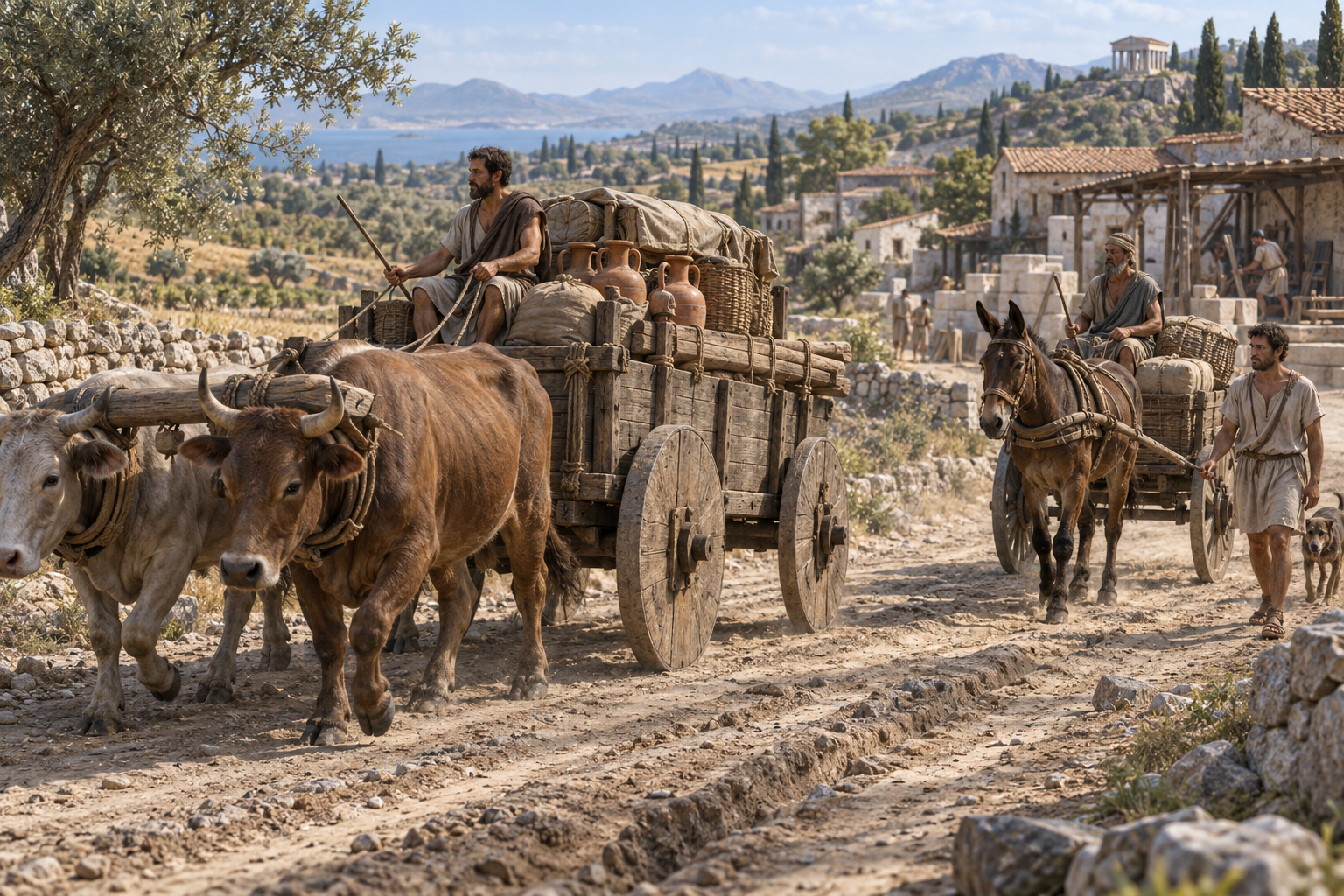
Carts & wagons
Carts carry grain, amphorae, tools, timber and quest cargo. They move large loads, but they need a passable road, animals to pull them and people willing to guard them.
Ships & coastal passage
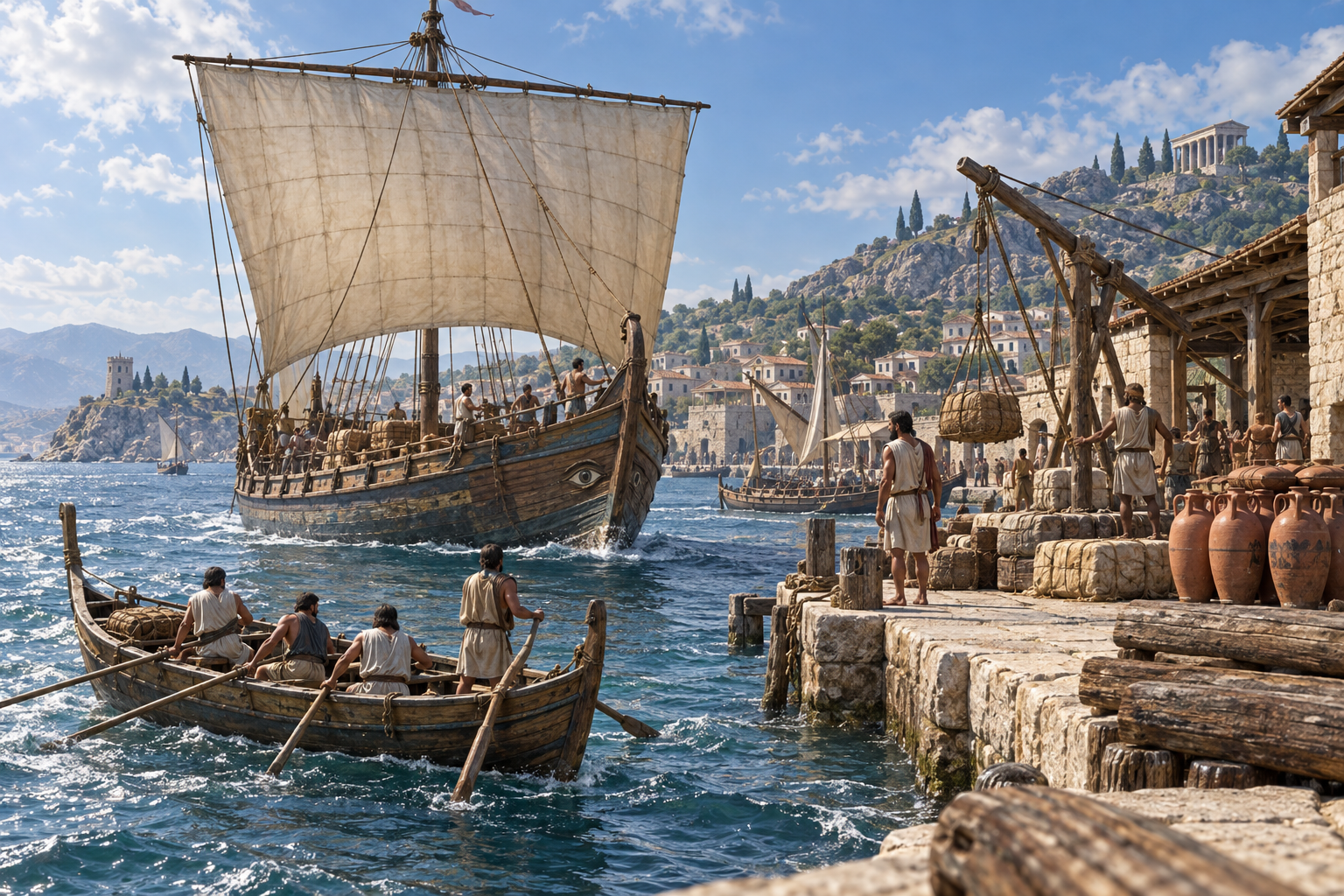
Board a merchant ship, travel with a cargo or cross a harbour in a small boat. The sea links inland farms and workshops to coastal markets, and reaches places a cart cannot.
How travel works
Road, track, upland path, river crossing or coastal passage.
Carry only what the rider, animal, cart or vessel can support.
Food, water, tack, repairs and local knowledge affect the attempt.
Weather, injury, blocked roads and hostile territory can change the plan.
Animals in the world
On farms and in households you can milk the goats, collect eggs, feed and groom animals, or help look after them. This gives you food, materials, goods to trade and local work.
Wild animals can be watched, tracked, avoided, driven off or hunted when you need food or a quest calls for it. Killing is possible, but it is rarely the first option.
Original transport concepts, not final game assets or authenticated reconstructions. Regional availability and historical details remain subject to review.