Lydia & Sardis
Once a kingdom, now a major centre of Persian administration. Lydian families and traditions carry on under imperial rule.
Western Anatolia · Spring 334 BCE
Oikoumené is an online role-playing game set in western Anatolia in 334 BCE. The region has been part of the Persian Empire for two centuries. Now Alexander’s army has landed, and every city, village, estate and household has to work out how to get through the war.
The region
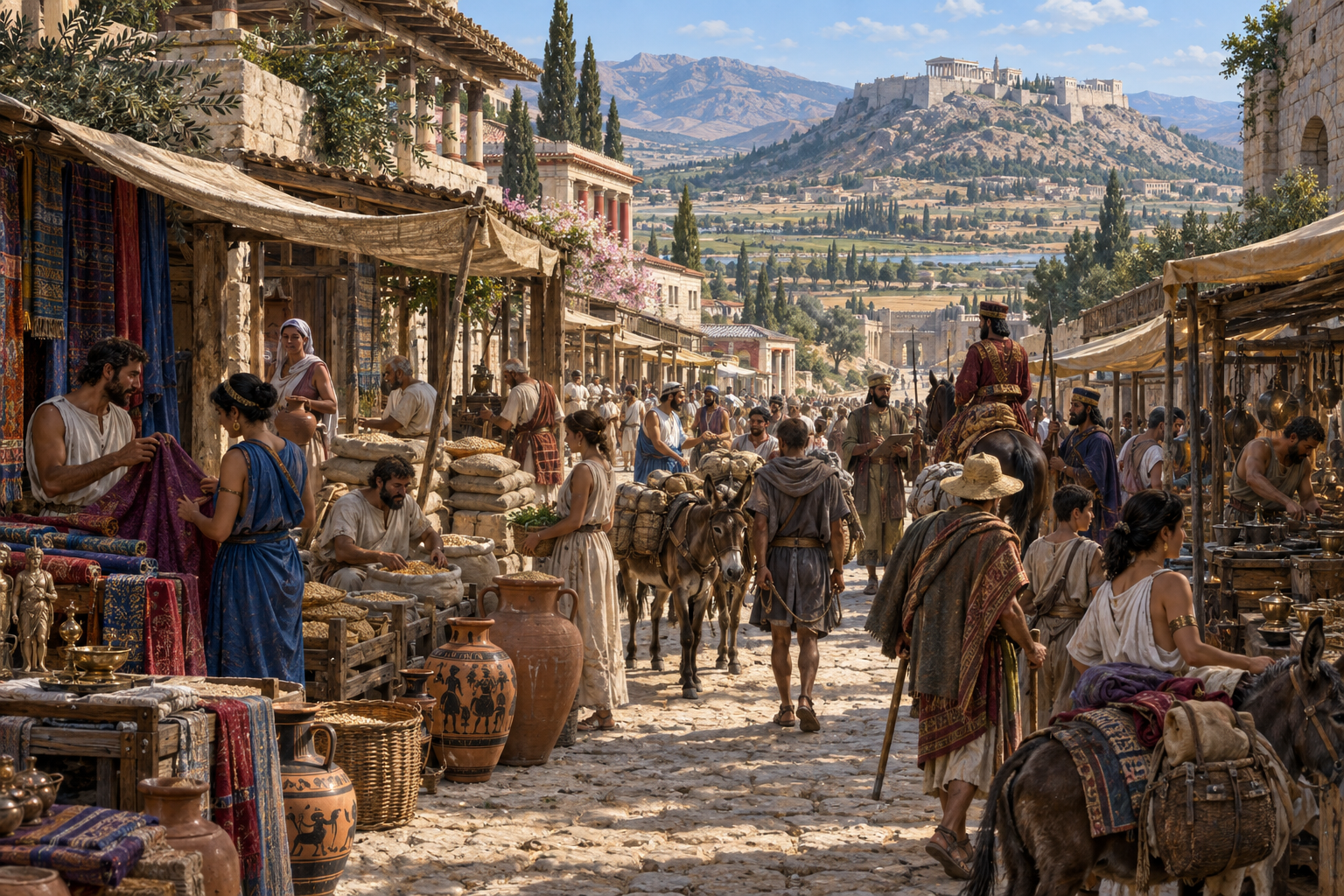
There is no neat border here between a Persian East and a Greek West. Languages, families and trade routes have been mixing for generations.
Lydians, Carians, Phrygians and Lycians live alongside the Greek-speaking cities of the coast. Persian officials, Iranian landholders, local dynasts, mercenaries, craftspeople and sailors use the same ports, estates and roads.
A potter might haggle in Greek at the market, pay taxes to a Persian governor, make offerings to a local god and wear cloth woven far beyond Anatolia. People shift languages and loyalties as their lives require.
Peoples, cities & powers
Once a kingdom, now a major centre of Persian administration. Lydian families and traditions carry on under imperial rule.
Greek-speaking cities on the coast, tied together by sanctuaries, shipping and trade. Each has its own politics and its own history with Persia.
Local dynasties with strong links to the sea and close ties to the Persian court. They have their own art and their own political traditions.
Villages, estates, pasture and fortified places along the roads that join the Aegean coast to central Anatolia and the rest of the empire.
Satraps, garrisons, courts, estates and royal roads tie local government to an empire that reaches as far as the Indus.
Macedonians march with allied Greek and Thracian contingents. Their soldiers fight for pay, out of obligation or ambition, and for the promise of land and plunder.
Before Alexander
Cyrus took Sardis in the sixth century BCE, and Lydia became part of the Achaemenid Empire. By 334 BCE Persian rule was simply how things worked: it shaped how land was held, how taxes were collected, who served in the army and whom the local elites married.
The collision of empires
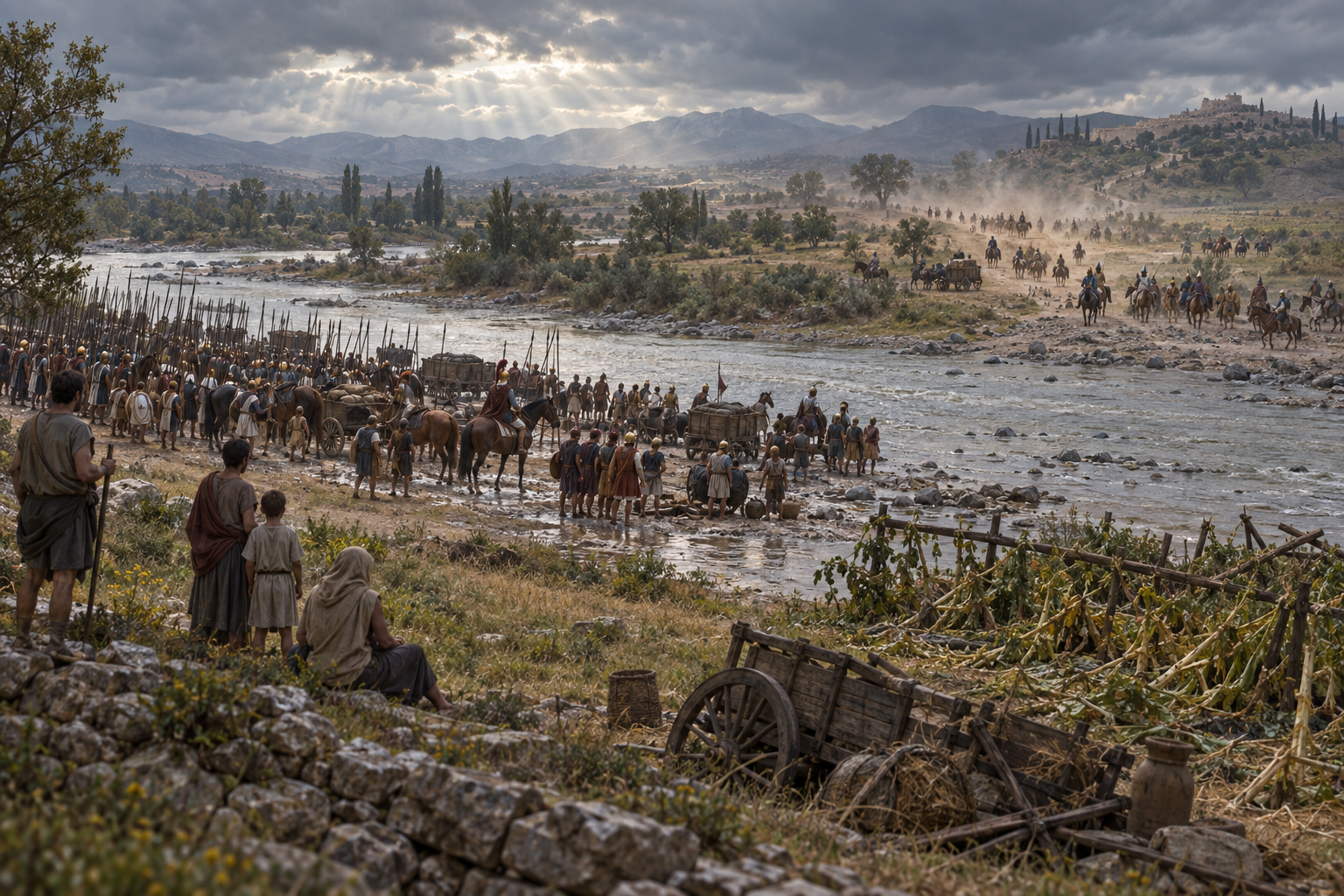
At the river Granicus, Alexander beats an army raised by the Persian satraps, with regional troops and Greek mercenaries. He tells the Greek cities he has come to free them from Persia.
The change is slow and patchy. Some cities open their gates; others close them. Officials stay in their posts, estates still need workers, soldiers still need feeding, and old local rivals look for new patrons. Alexander often keeps the Persian system running and puts his own people at the top.
Culture before conquest
Greek-speaking towns had stood along the Aegean coast for centuries. Sanctuaries, harbours, mercenary service, mixed marriages and trade moved goods and ideas in every direction.
You can see it in language, coins, art and civic life, but the region never became uniformly Greek. Inland villages, coastal cities and Persian households each mixed traditions in their own way, and the game shows that mix as it was.
Where the player enters
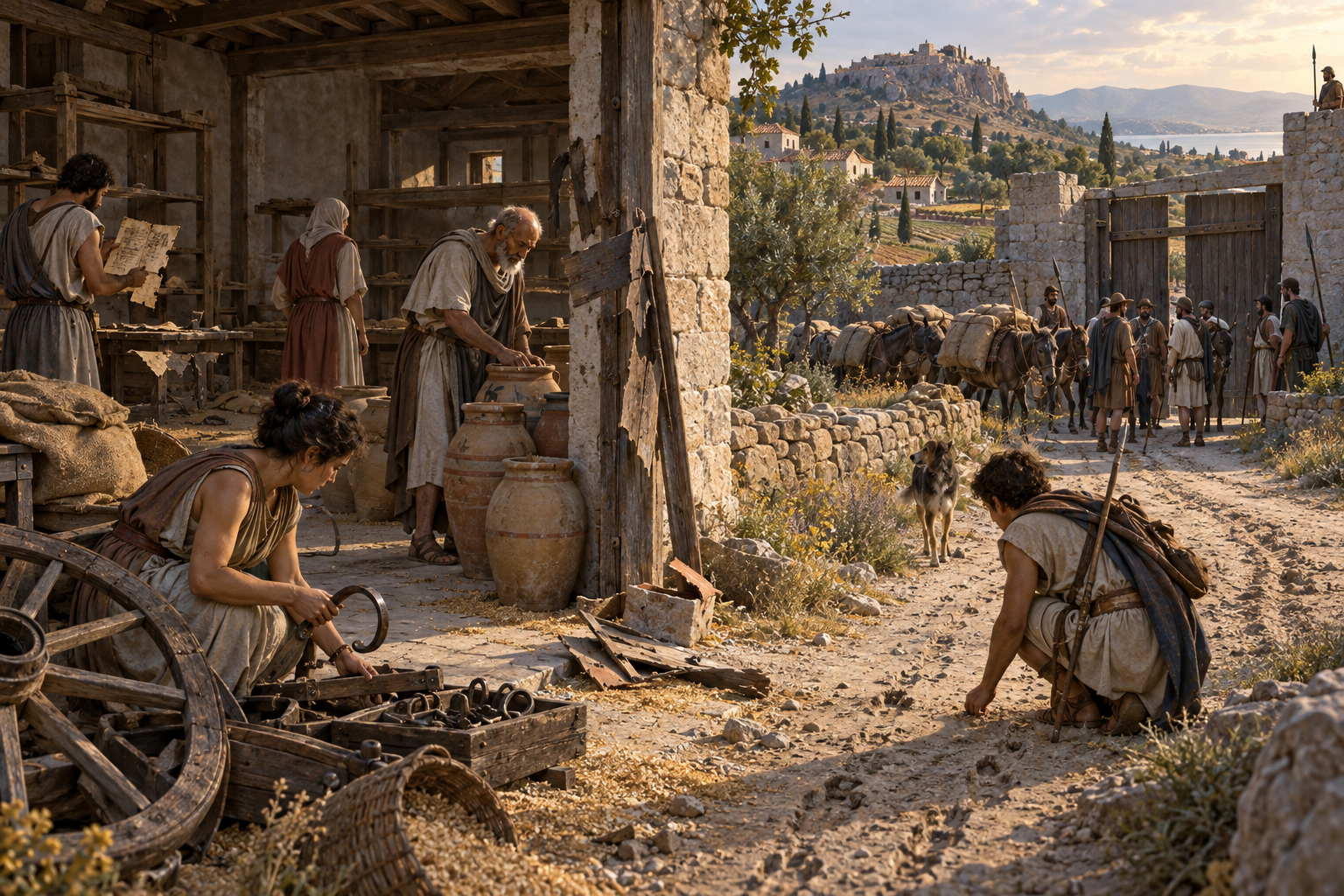
Your caravan reaches a Lydian village a few days after the Macedonian victory. The granary is empty and some families have disappeared.
Searching for them pulls you into army requisitions, debts, black-market deals, soldiers with nowhere to go and local ambitions. Every side has people you will like and people you won’t, and every decision costs someone something.
Enter the campaignDocumented foundation
Places, objects, institutions and known events are based on historical and archaeological research.
Plausible fiction
Invented characters and local events stay within what the period makes possible. Where we are unsure, we say so.
Human complexity
People choose sides for reasons of circumstance, belief, family and ambition. Ancestry never decides virtue, class or skill.